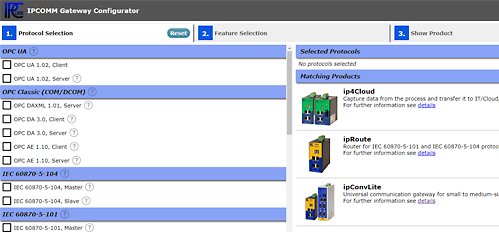
Universal Protocol Conversion
The protocol converters offer universal use for the protocols presented here
as well as all other protocols widely used by energy providers and other
industries. Further uses of protocol converters are as gateways, data
concentrators or telecontrol head.
Communication terminal devices that are incompatible can be connected via the ipConv or ipConvLite protocol converters. Their universal software structure enables connection of the most diverse protocols.
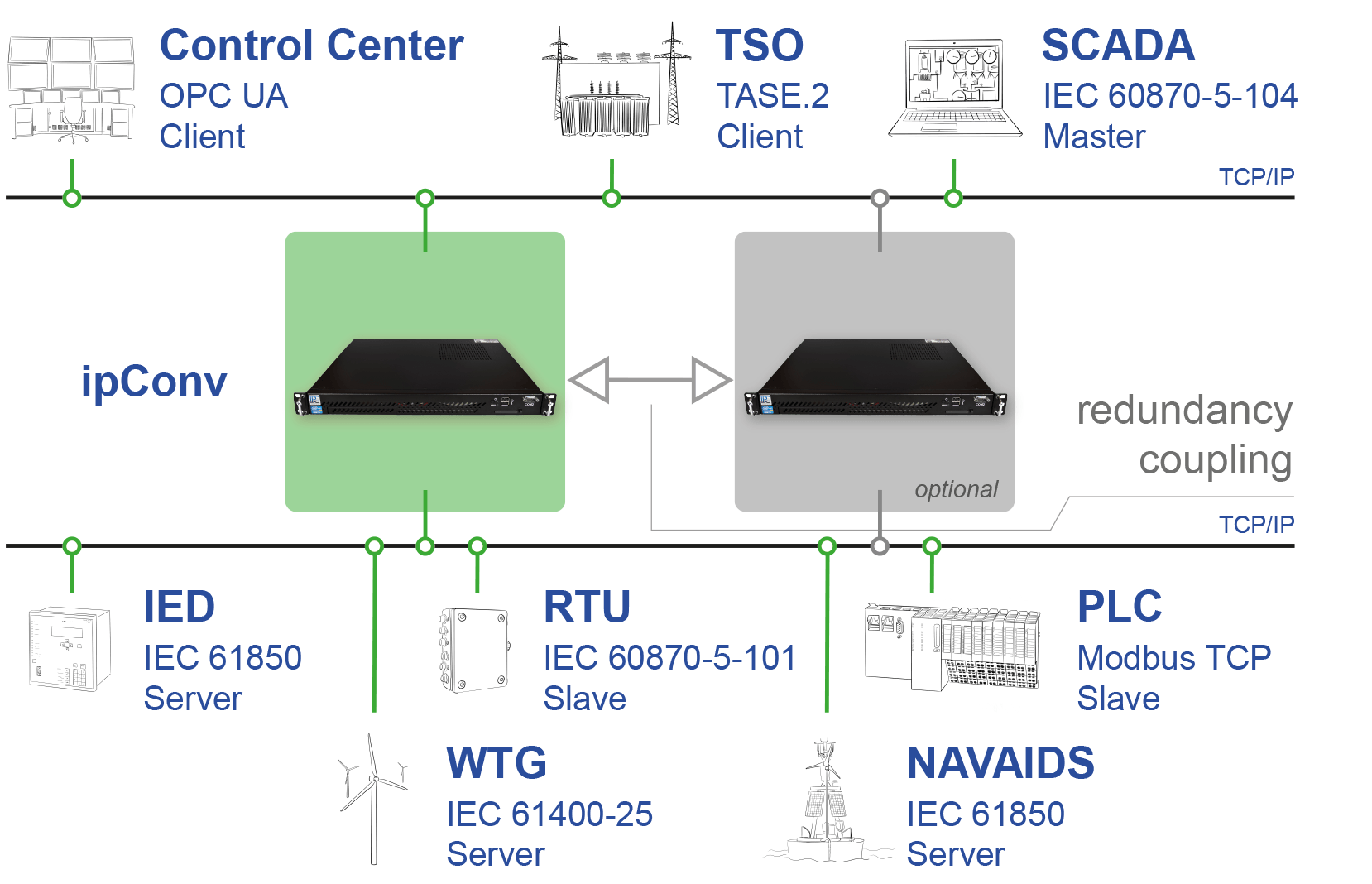
Differing application layers (layer 7 of the ISO/OSI model) with different address spaces or types of information representation can easily be "eliminated" by parameterization. An Excel spreadsheet or algorithm can be used for addressing.
Both ipConv and ipConvLite offer the same functional range.
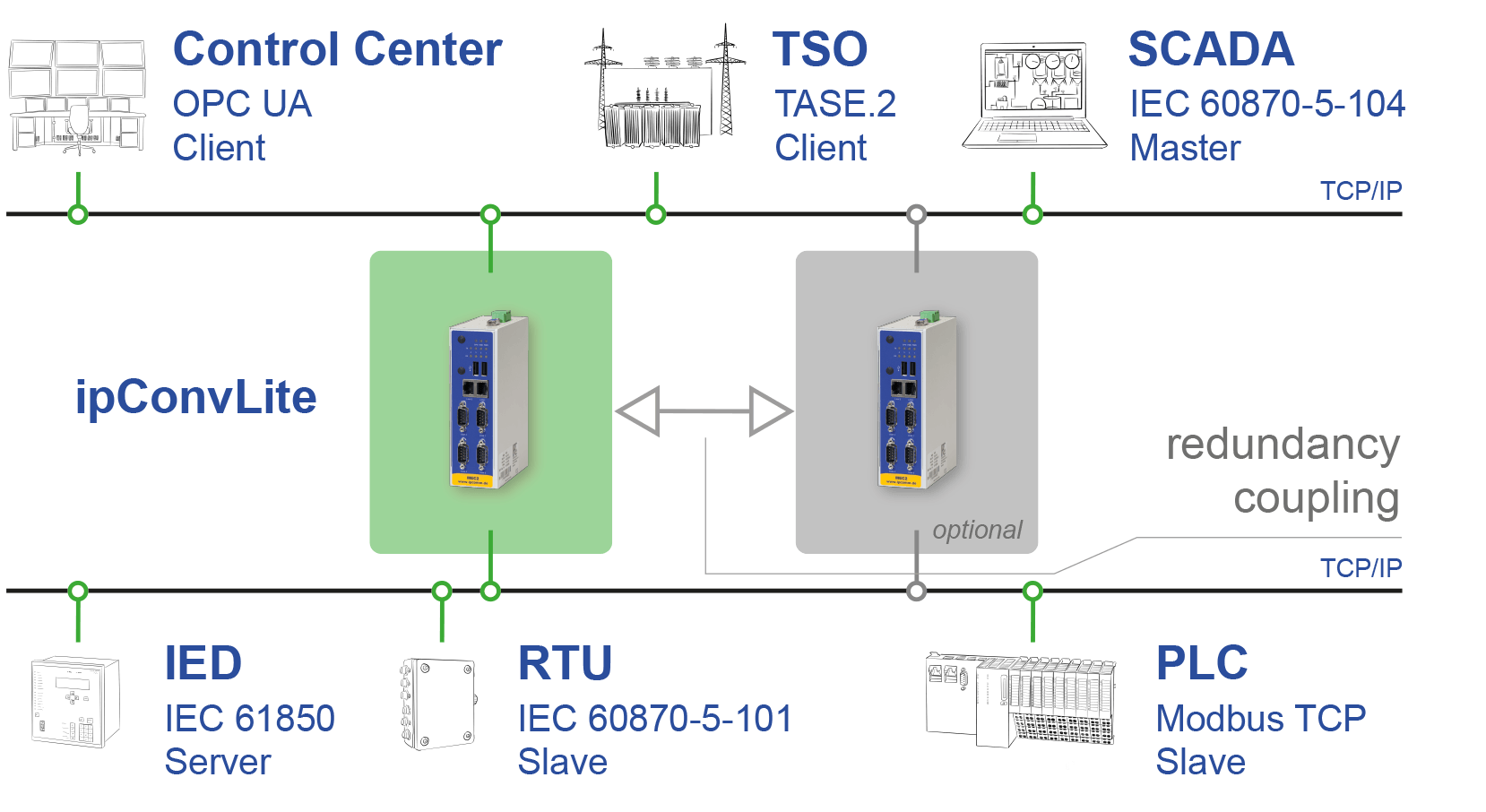
ipConvLite is used for selected protocols with no or only small deviations from the standard. This provides easy commissioning and operation of ipConvLite by the end customer with protocol specific information but without any indepth knowledge of the product.
A central connection means the protocol converter is installed at the control station. A central installation has the advantage that more than one telecontrol devices can be linked up via different lines.
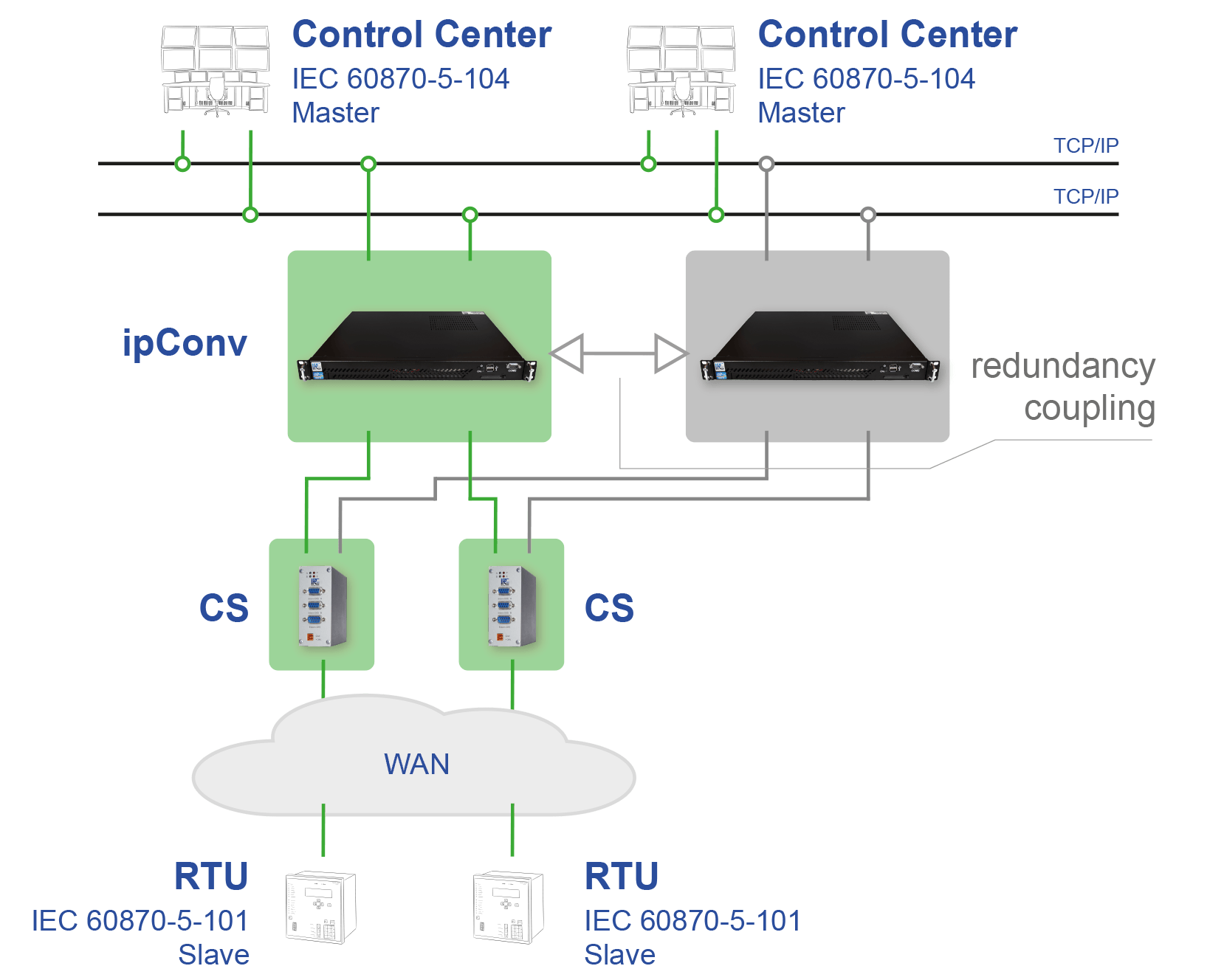
In cases where there is only a limited number of interfaces, several lines may be reduced to a few or even a single line (avoid a bottleneck). For central installation, typically our 19" industrial PCs (IPC191X1 19" 1U, IPC191V5 19" 1U) are used.
Reference project: SONELGAZ
A decentral connection means the protocol converter is installed at the relevant substation. The telecontrol devices (slave) of a substation can be connected to a protocol converter. Either a dedicated serial line or a network can be used for coupling to the control station.
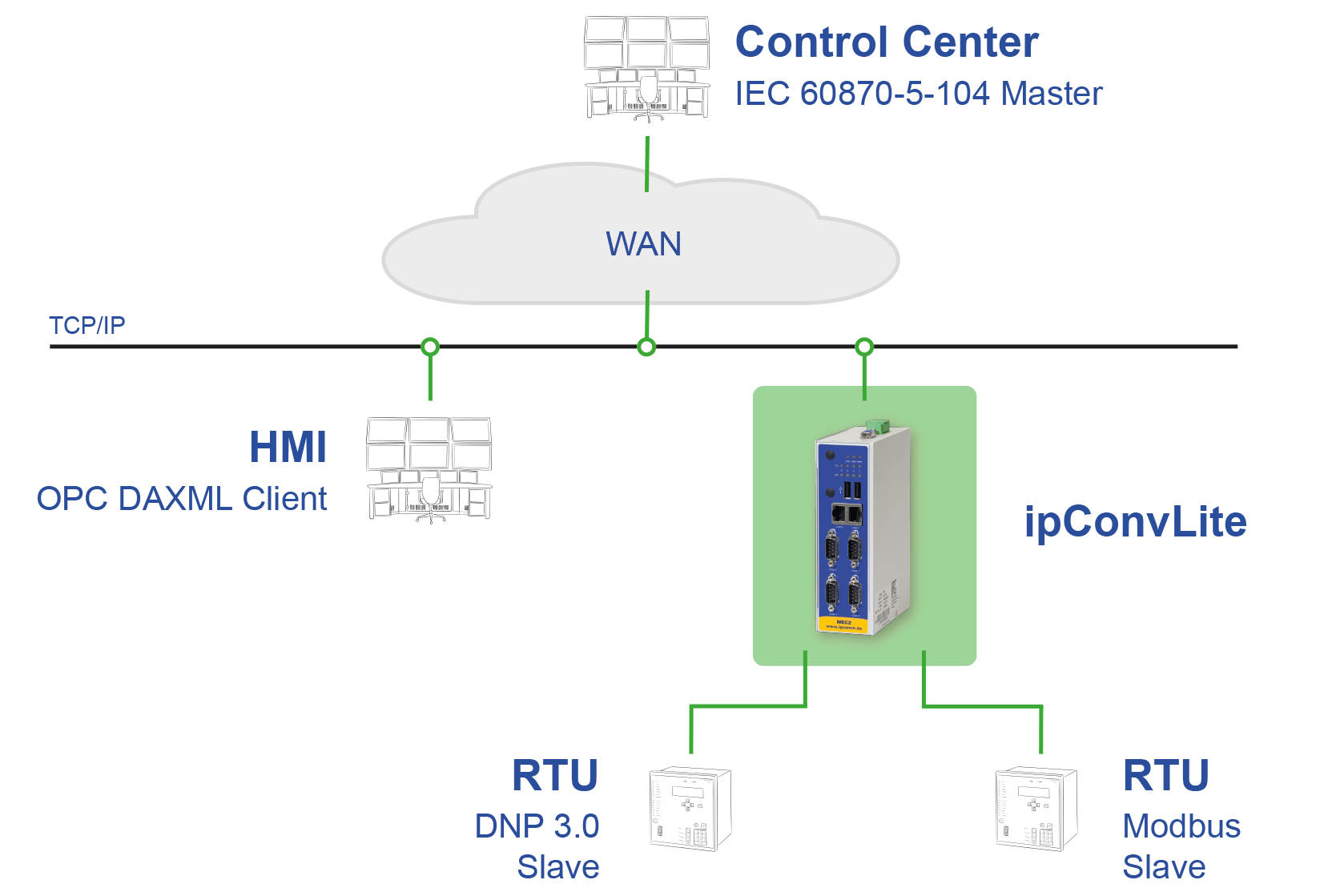
A decentral installation is recommended for applications where distributed telecontrol devices (slave) are to be connected to the control station via an existing network. Usually the DIN rail mounted Embedded Controllers (SEC3 or MEC2) are used.
Reference project: Tagebau Nochten
Protocol converters have been designed for redundant operation.
A redundant system consists of two protocol converters which work in hot-standby operation and monitor each other. The monitoring function can be implemented over an existing network (Ethernet, TCP/IP) or the RS232 line. The RS232 line is the preferable solution, as a network fault (for instance a faulty switch) is more likely to occur than a failure in the RS232 connection.
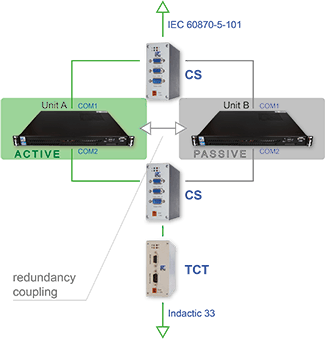
A failure check determines which protocol converter is switched to the active or passive state. The channel switch (CS) implements the physical switching of the serial lines.
Reference projects: FRANKENDATA, FSC HECHI, Burfell, BLS AlpTransit - Lötschbergtunnel.
Your telecontrol devices (slave) might be connected to the control station (master) over the public telecommunications network which demand high fees for their use.
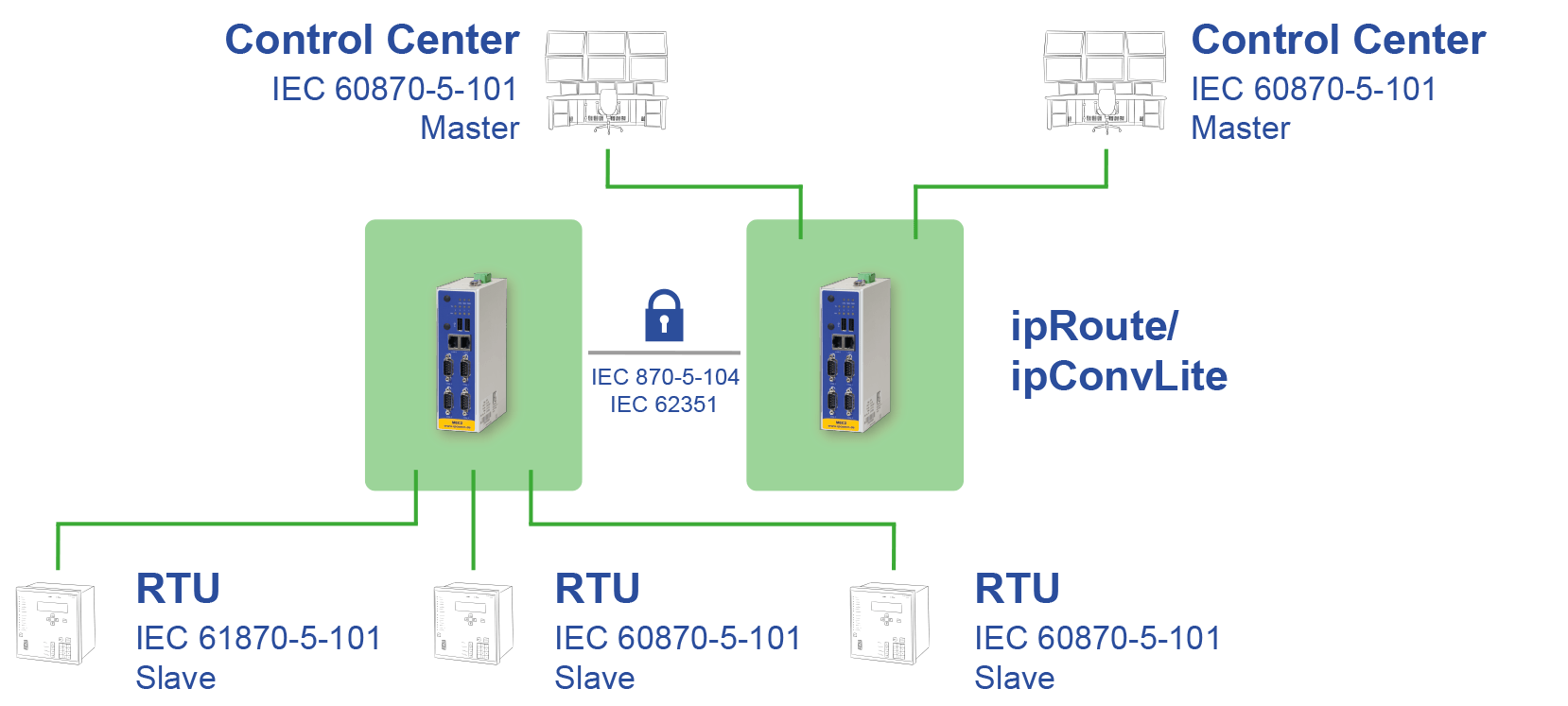
A more cost-efficient solution is data transmission via a TCP/IP network, i.e. the internet. This requires two protocol converters, one of which is connected to the control stations the other to the telecontrol devices. Data is transmitted between the protocol converters via a TCP/IP enabled IEC 60870-5-104 protocol.
For further information about protocol converters, please Contact our sales team.